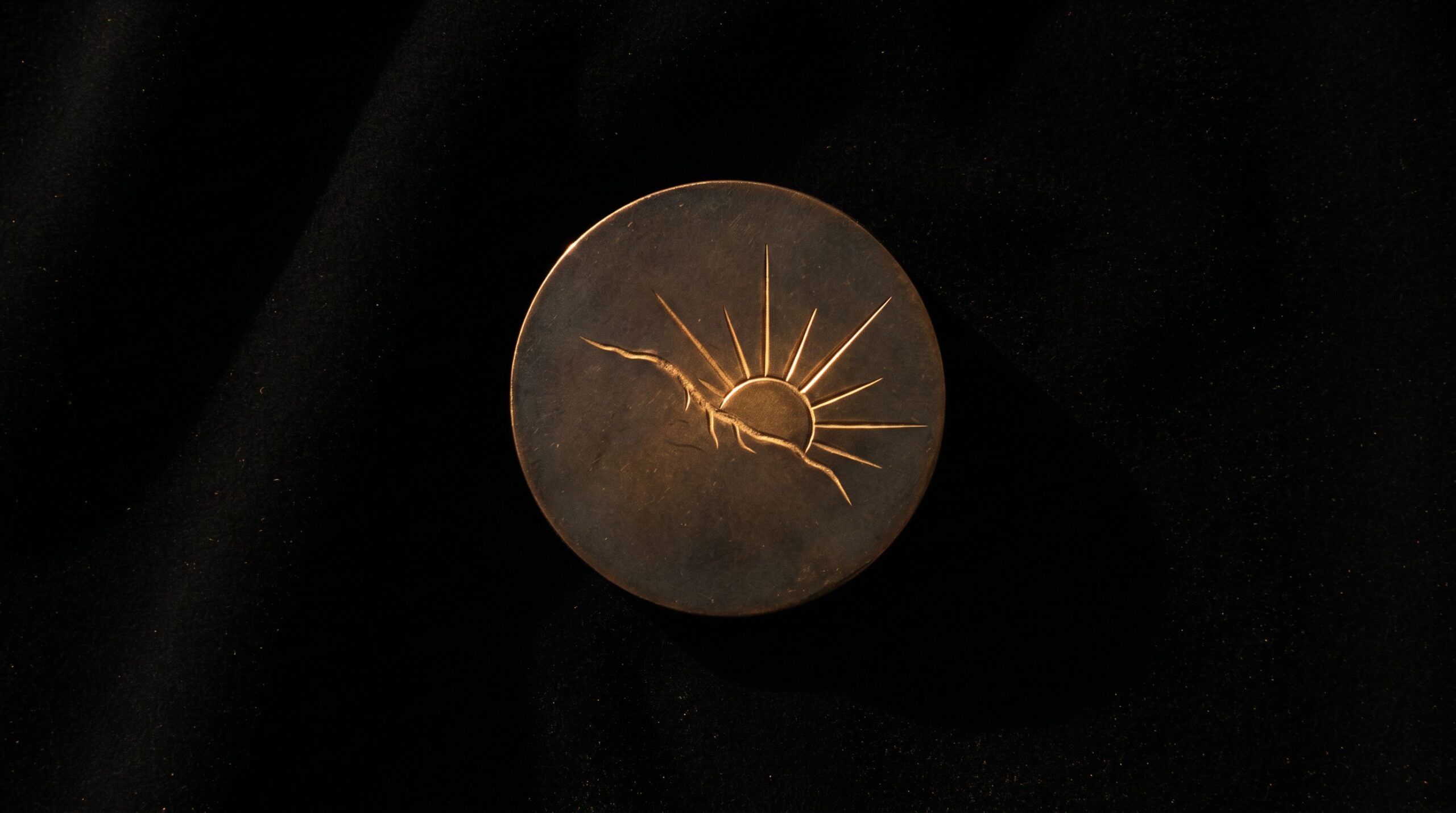
But he was wounded for our transgressions, he was bruised for our iniquities: the chastisement of our peace was upon him; and with his stripes we are healed.
Isaiah 53:5
I. Sacrifice as a structure of healing
There is in the human tradition one sentence which for thousands of years has joined two peoples, two books and one truth about the human being. A sentence recorded in the Book of Isaiah — the common heritage of the Torah and the Bible — and which in the days of Easter resounds with a power that no age has managed to annul.
It is not a sentence about defeat. It is a sentence about the deepest structure of human healing — about the fact that true healing is born where someone takes upon himself a burden that others are not yet able to bear.
II. A responsibility that precedes protocol
In the world in which we work — the world of hospitals, regulation, healthcare systems and decisions on which human lives depend — these words carry a dimension that no clinical doctrine can contain. For they speak of something that precedes every treatment protocol: of one person’s readiness to take responsibility for another. Not formal responsibility, written into a contract. But moral responsibility — the kind that hurts, that costs, and that does not seek public recognition.
Every nurse who stays at a patient’s bedside an hour longer than the rota provides knows what this responsibility is. Every doctor who takes a difficult therapeutic decision — alone, at night, without the cover of a committee — understands this sentence of Isaiah not from reading but from experience. Every hospital director who stands between the budget and the dignity of the patient carries within him the echo of the same age-old pattern.
III. Justice and compassion — two dimensions of a single act
The doctrine of Just Council teaches us that justice without compassion becomes tyranny, and compassion without discernment becomes a sentimentalism which in the longer term harms those it wishes to protect. Easter is a feast that unites both of these dimensions in a single act: in the act of a sacrifice that is at once the highest justice and the deepest compassion.
The prophet Isaiah — writing centuries before the events that Christianity made the foundation of its faith — contained in a single image what the study of values sets out in treatises: that trust between people is built not by declarations but by wounds. That transparency requires courage, and courage without humility becomes conceit. That solidarity is not a slogan but a price that someone must pay — first, with no guarantee that others will follow.
Marshal Piłsudski wrote: “To be defeated and not to submit — that is victory.” He knew, for he himself bore wounds for a community that did not always understand their meaning. The Europe of the twentieth century — from the trenches of Verdun to the Berlin Wall — is a history of people who took suffering upon themselves so that others might live in dignity. And every generation must read this lesson anew — not from a textbook, but from its own readiness to serve.
IV. Diagnosis and programme
“With his stripes we are healed”, says Isaiah. For us, people building healthcare systems in Poland and in Europe, this sentence is at once a diagnosis and a programme. A diagnosis — because every system that ignores the human suffering of its own staff itself becomes sick. A programme — because a culture of just treatment, a culture of learning from mistakes instead of punishing them, a culture in which hope is not a luxury but a working tool — is a culture that heals not only patients but also those who heal them.
The Healthcare Poland Foundation exists to build this culture. Not as an abstraction, but as a concrete practice: in hospitals, in regulation, in conversations with international partners, in the everyday decisions that shape the lives of thousands of people.
V. Greetings
To our colleagues
Thank you for your everyday courage. For the decisions no one sees, and for the burdens no one weighs. Your work is precisely what Isaiah speaks of: healing that is born of a readiness to bear hardship.
To our partners
From Israel, Montenegro, Switzerland, the United Kingdom and every place in the world where together we build bridges of health between nations — thank you for your trust. Trust is the rarest currency of the modern world. You share it with us, and that is a gift no agreement can fully encompass.
To the Foundation’s supporters
Thank you for the hope you place in us. Hope is not optimism. Hope is a conscious decision to act despite uncertainty. And that decision of yours gives us strength.
VI. Proclamation
May this Easter bring you and your loved ones a peace born not of the absence of difficulties — but of the certainty that difficulties have meaning when they serve another human being.
May the wounds you carry — professional and personal — become a source of health for yourselves and for those whom you serve.
Am Israel Chai. Niech żyje Polska! (Long live Poland!) Christ is risen. Hope lives.
With respect and gratitude,
Healthcare Poland Foundation · Just Council · Easter 2026